Plymouth, UK
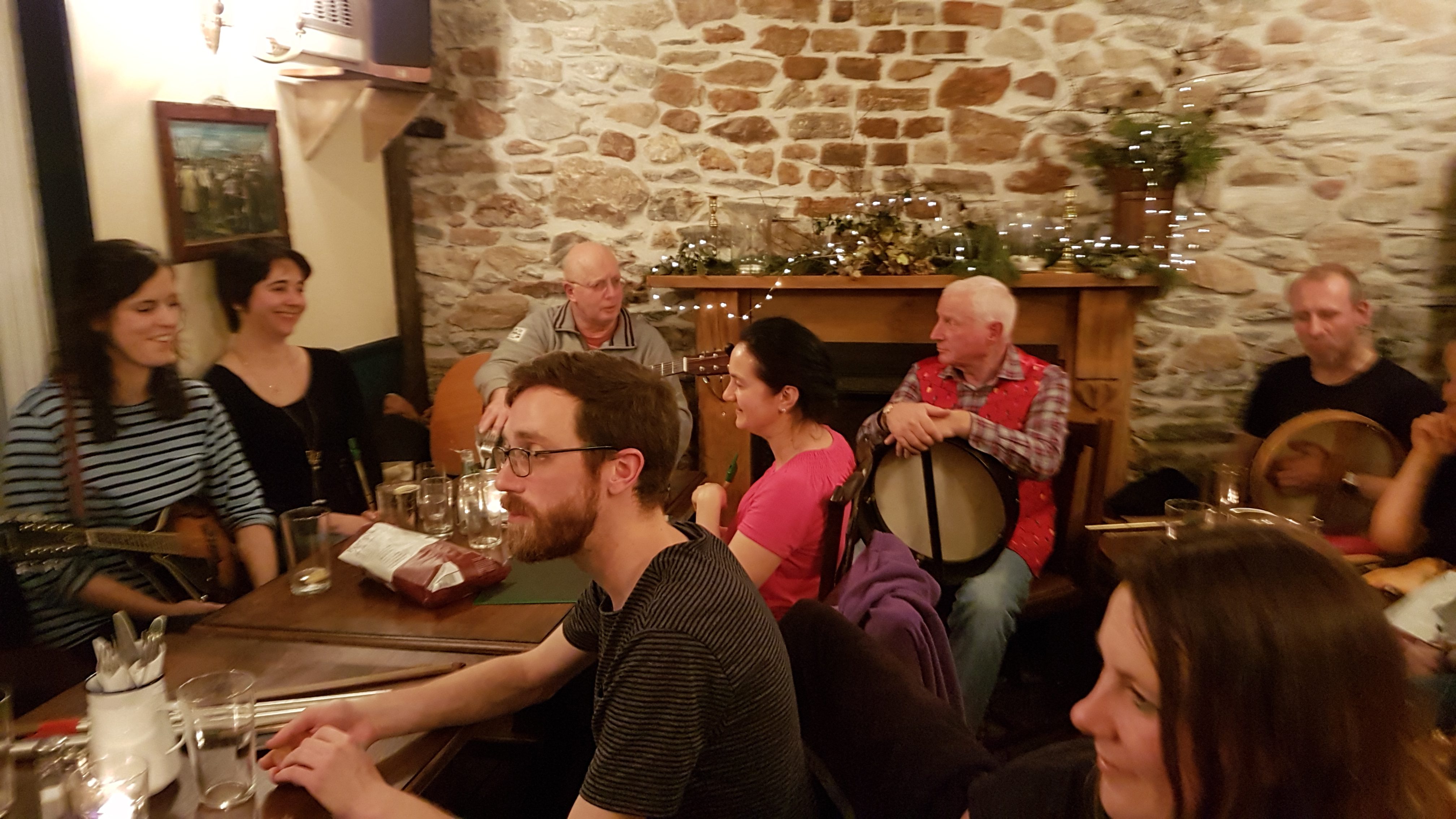
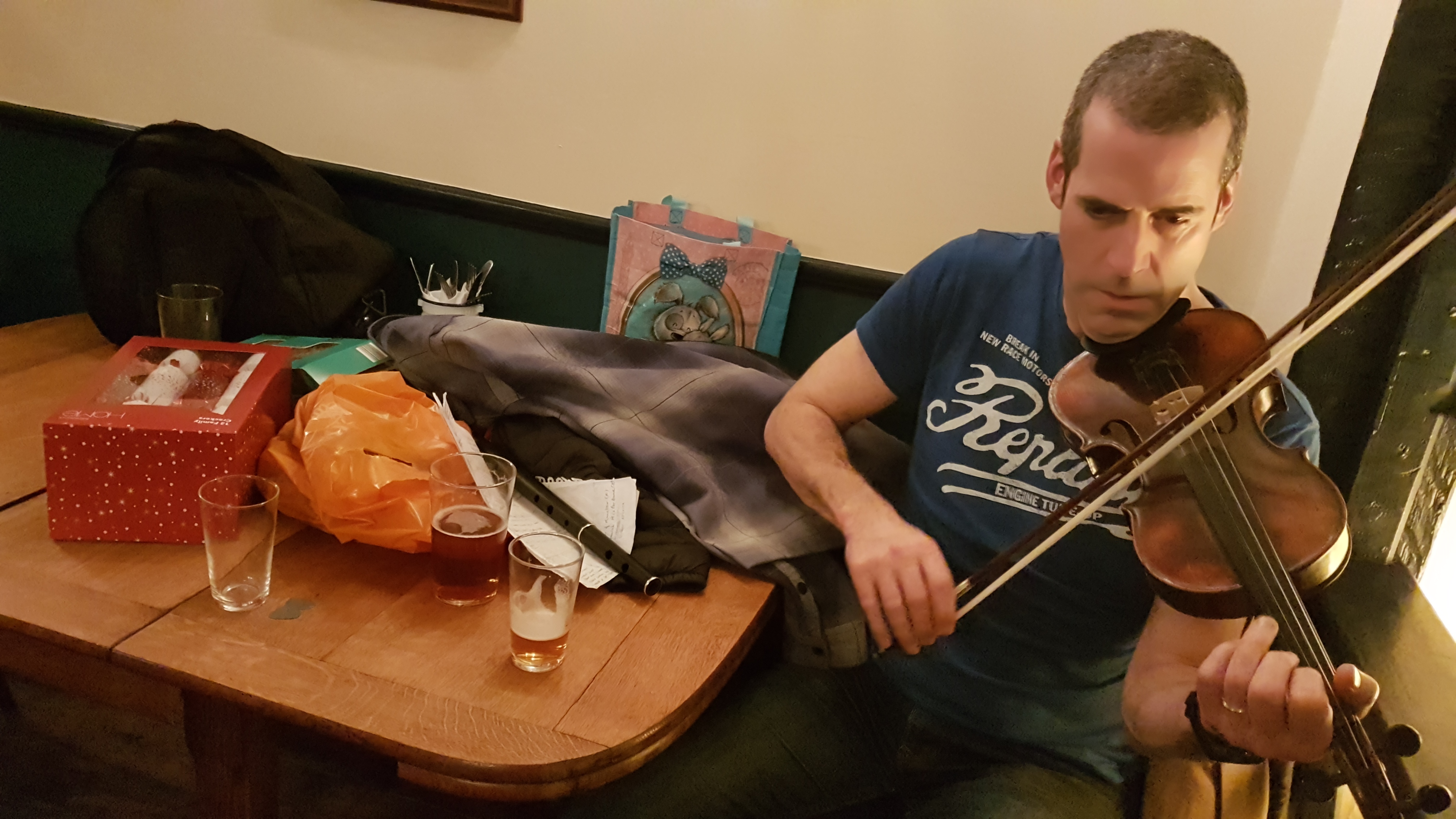
This was our Christmas celebration.
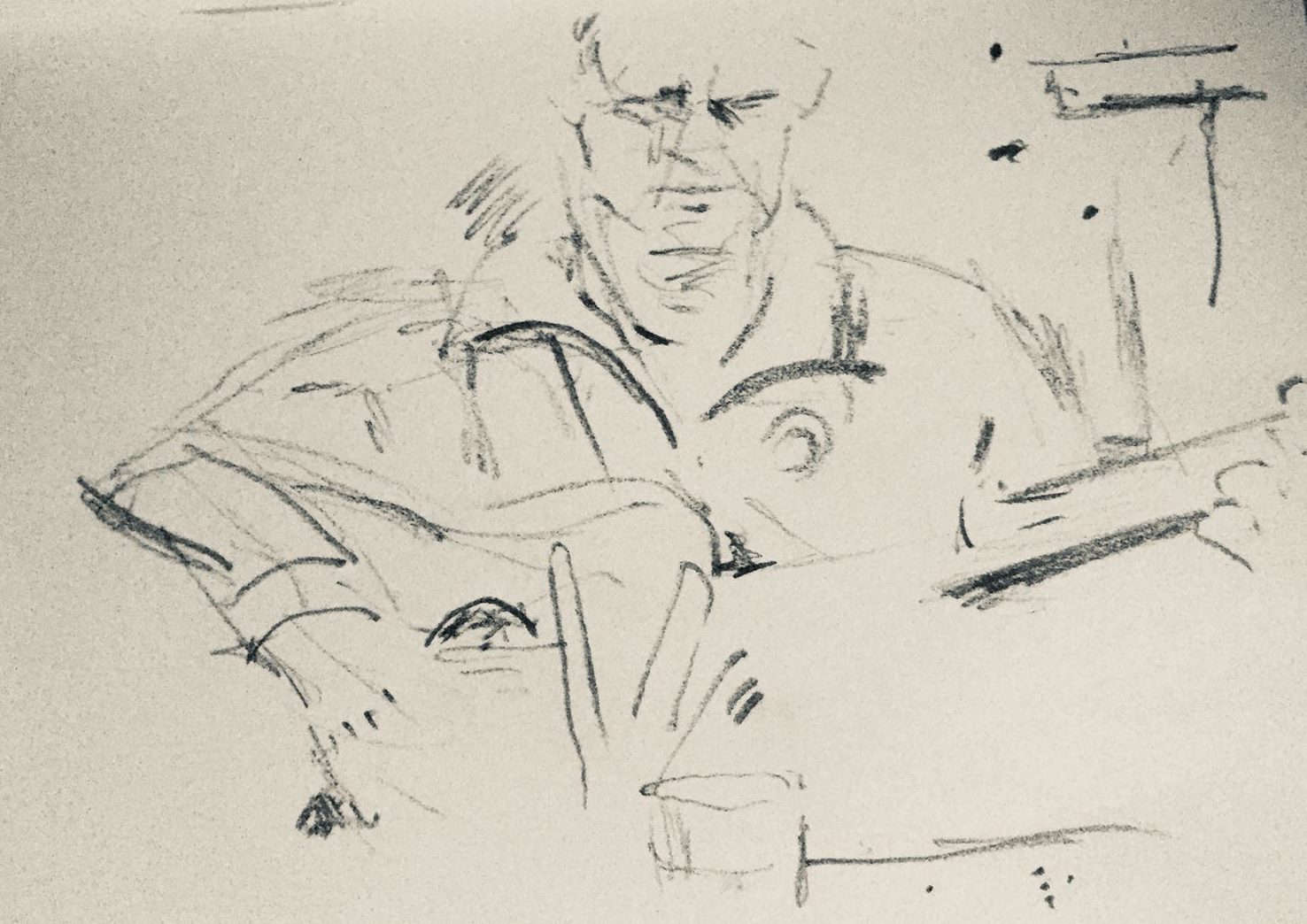
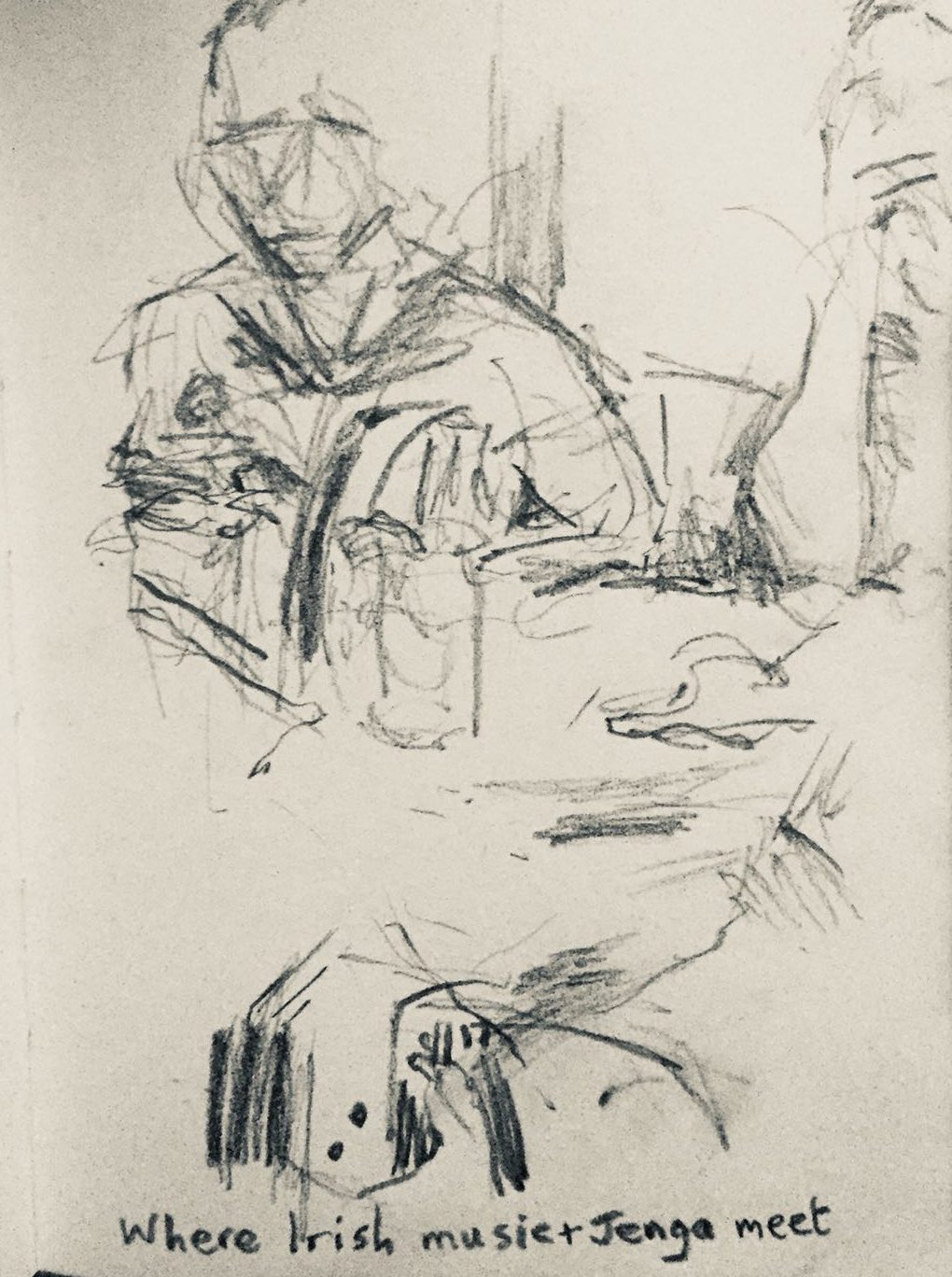
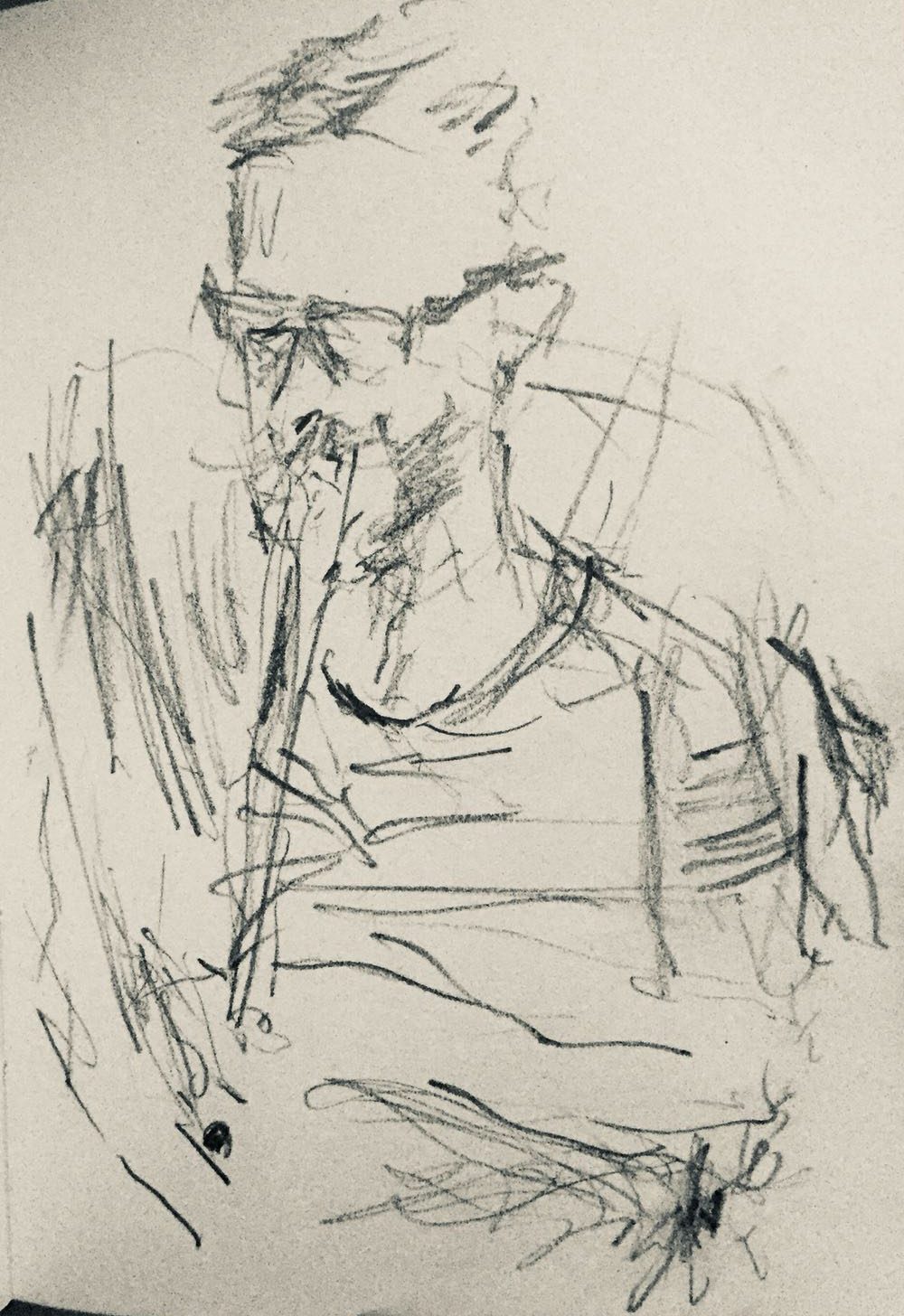
Thanks to James for the drawings!
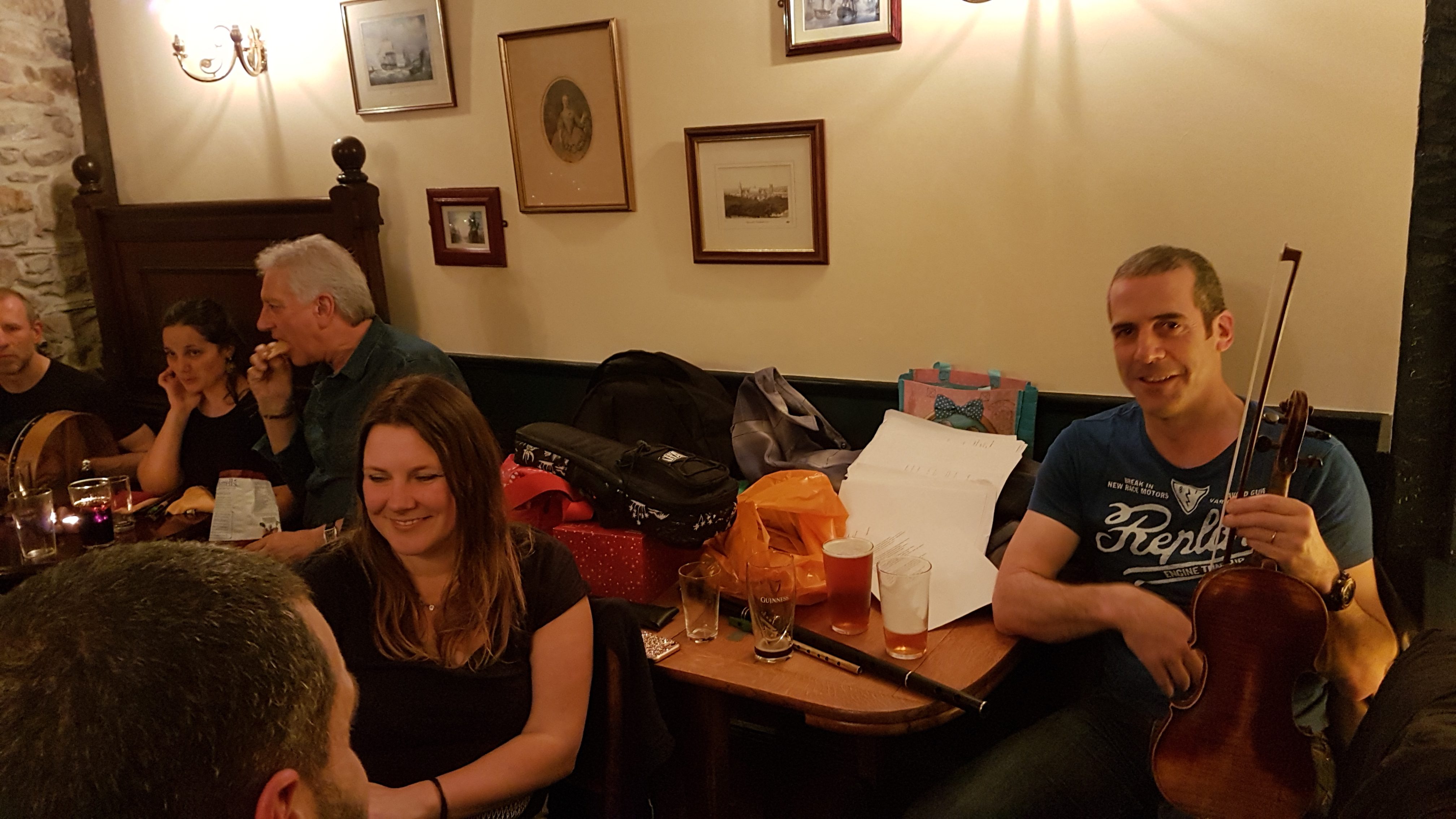
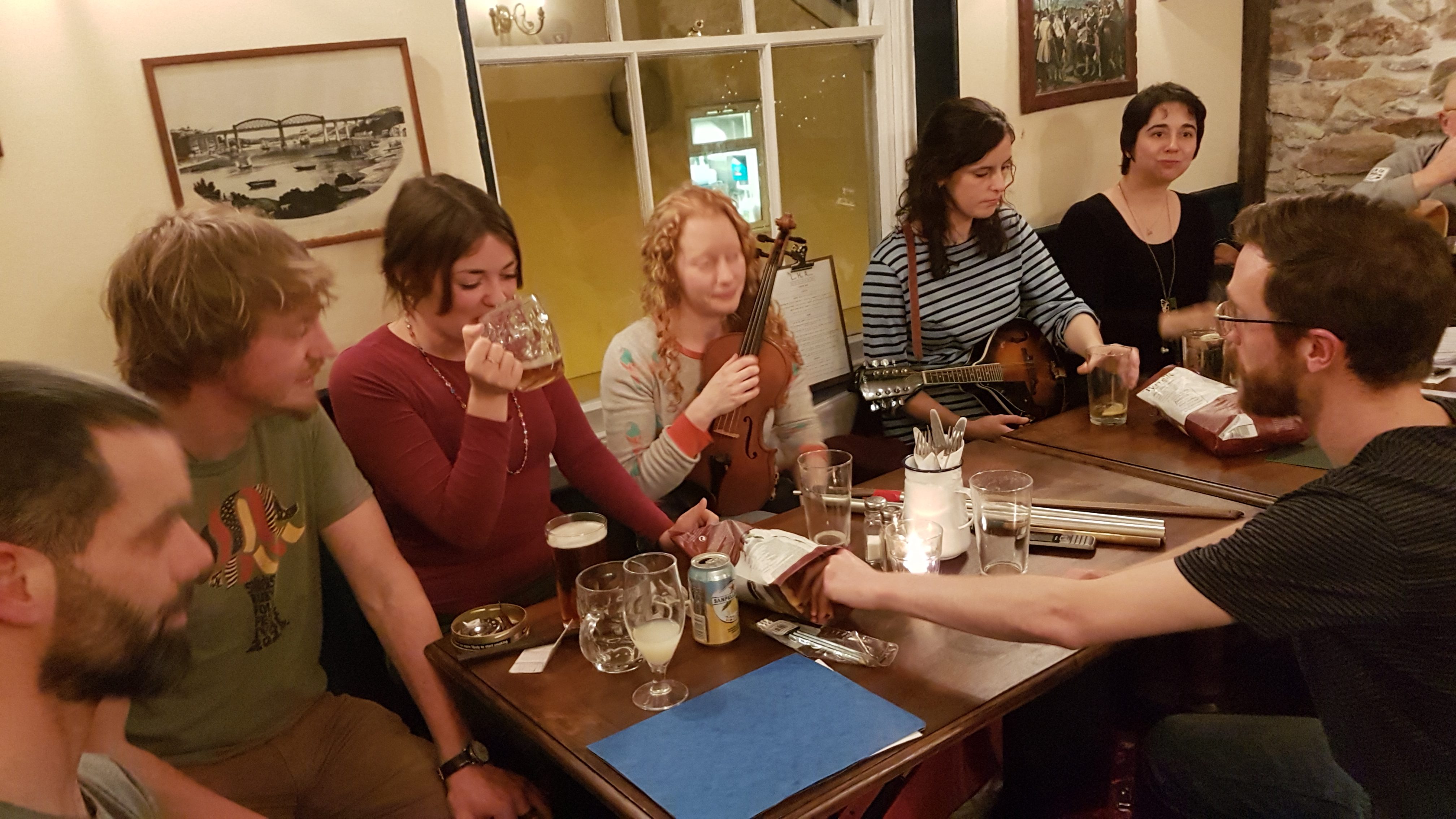
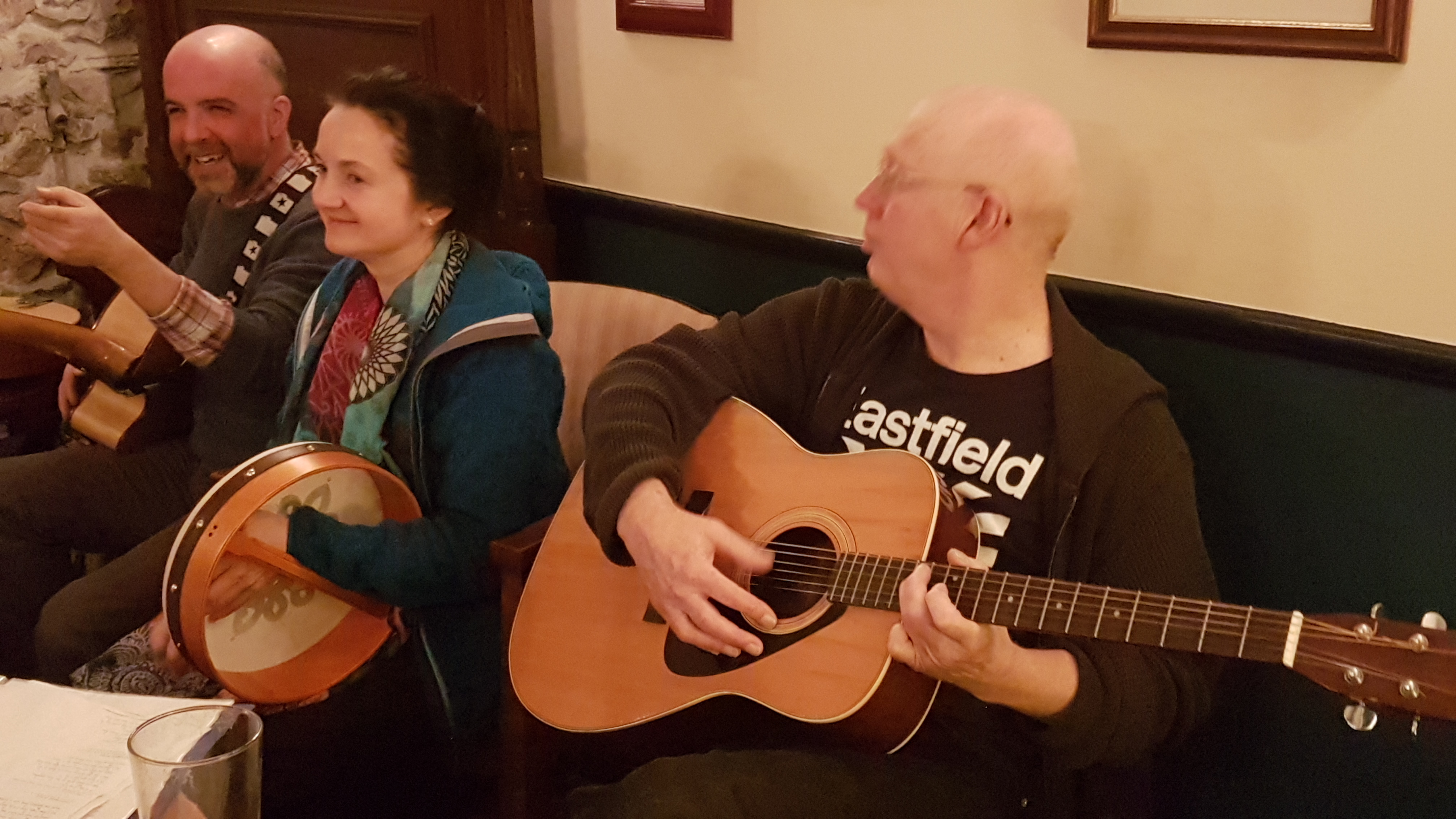
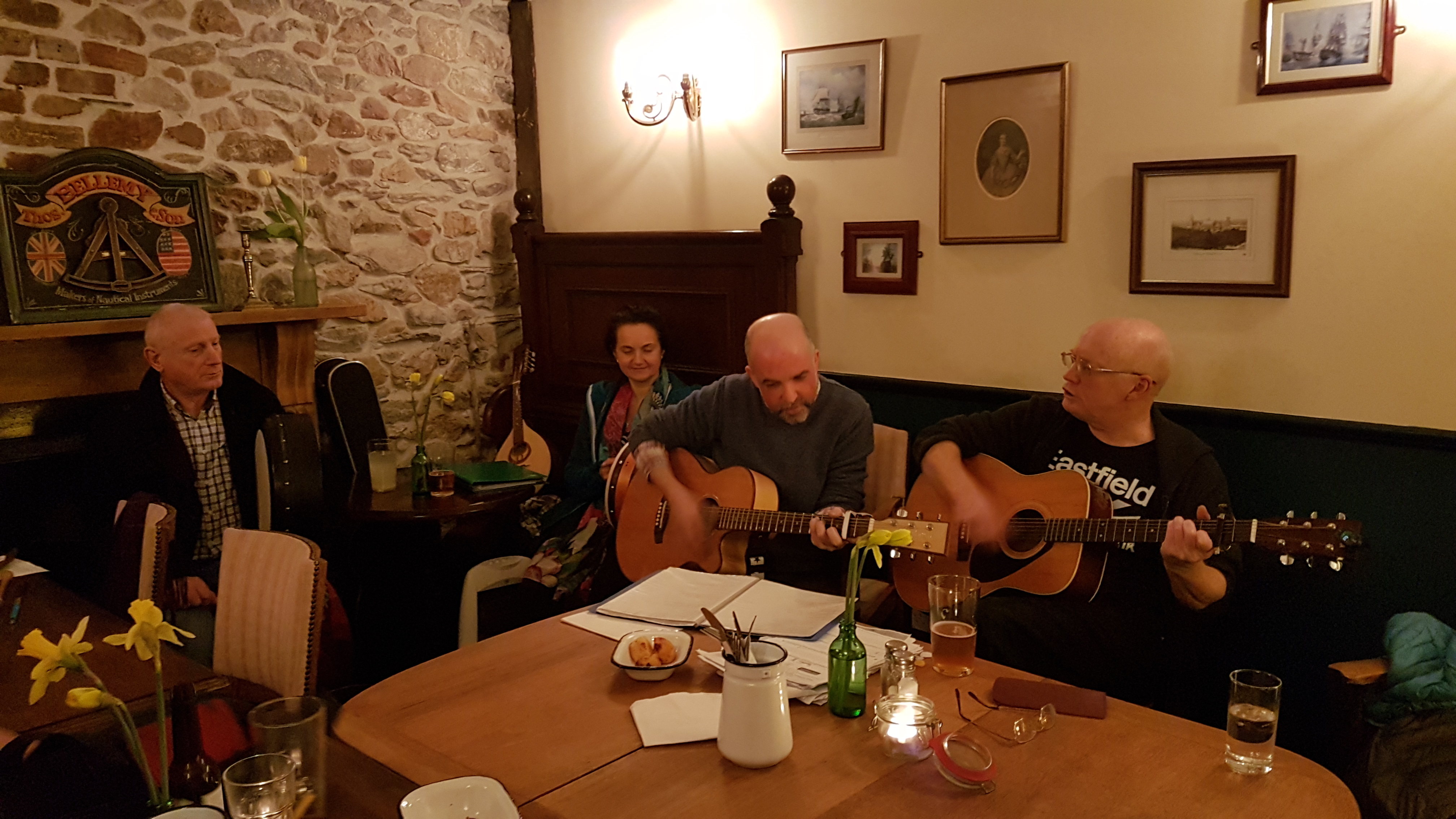
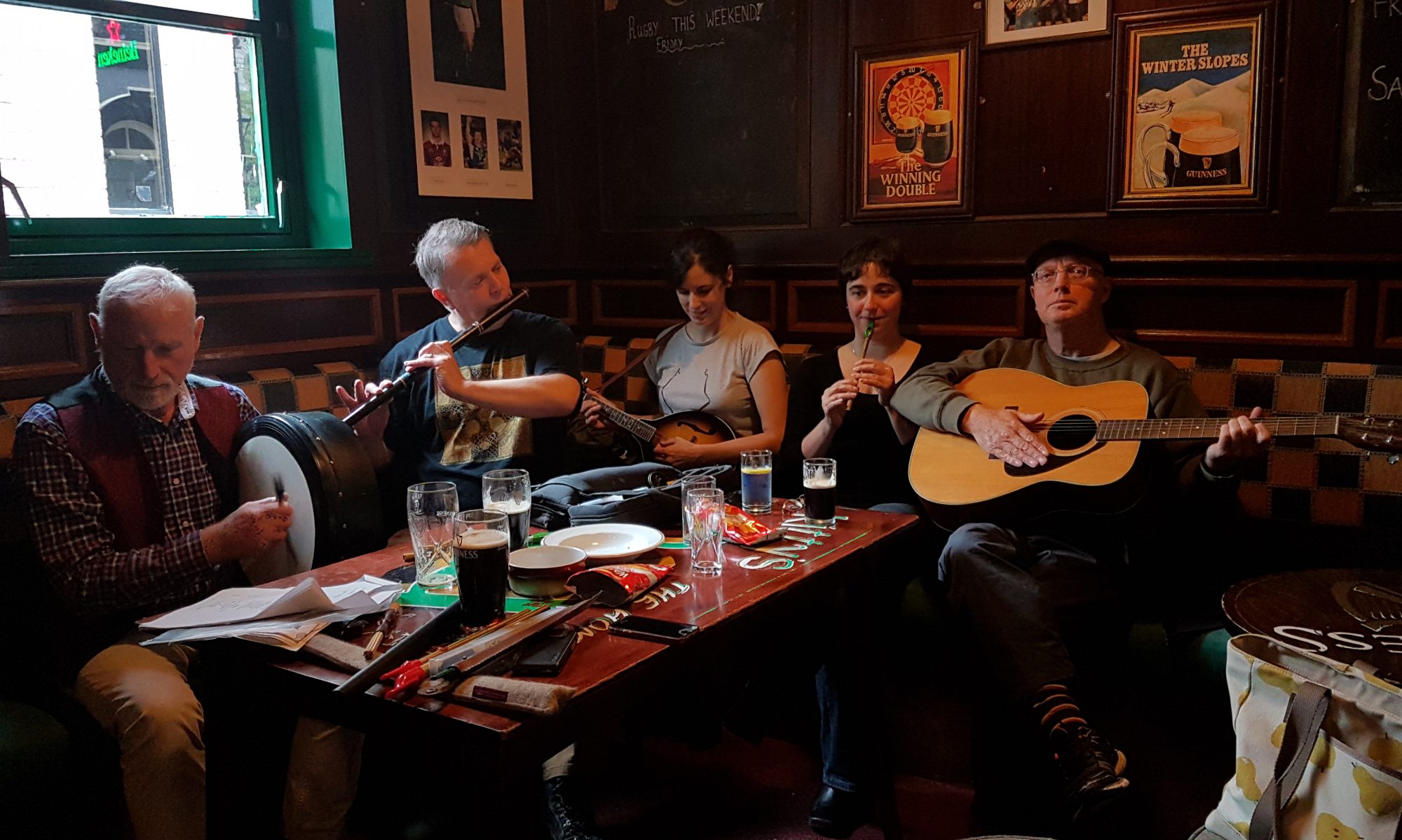
Everybody knows what a band is and most have been to a Karaoke or Open Mic night but the general population sometimes struggle to understand what a session is.
A session is a gathering of musicians for the purpose of celebrating their common interest in a style of music by playing it together in a relaxed, informal setting. This usually involves traditional tunes and songs. The music is normally played in a pub, sat at tables rather than on a stage and doesn’t involve any form of payment outside the occasional free beer. The music is made by and for the musicians and the audience are generally not obliged to keep quiet or even respond to the music. A round of applause may occur but isn’t expected and occasionally a ‘shhh!’ may be heard if a solo singer is battling to be heard. Personally, I consider this rude if deployed too often and we should accept the boisterous nature a pub as part of the scene.
Although sessions can develop spontaneously they are normally booked in advance and the pub will usually reserve a few tables for the players and may advertise the event. Spectators often instinctively make way for musicians in a crowded pub.
Understanding the personality of a session is important. What appears to be laissez-faire is driven by an under current of rules and etiquette.
The organisers of most sessions will normally set the scene for what type of music is played. In our case traditional Irish or celtic music but other sessions may concentrate on English, Bluegrass or a mixture of genres.
Some sessions are more ‘open’ than others, welcoming players outside of the clique. Other sessions advertise specifically that they aren’t for beginners.
In some sessions the emphasis is less on group playing and more about individual performances, taking it in strict turns to play (this is more of a folk club or sing-around rather than a true session).
Although we welcome beginners and new players a session isn’t the place to practice. It is good to have learnt the tune before playing. We don’t run through scales or practice sections of tunes. Although we aren’t on a stage we do have an audience and would like to be invited back!
Having said that don’t be worried about making mistakes. It’s a common enough occurrence even with experienced musicians. The music is important to us but we never let it get in the way of the crack.